top of page

from THINK TANK

to THINK TECH

Axis Institute is a nonprofit unifying global fragmented policy and development data into a single interactive platform powering economic analysis, geopolitical forecasting, rigorous research, and public education. We are leading a global movement to modernize how research institutions operate, how information systems interact, and how people, experts, and innovators access the data that shapes their lives.

Publications

Advancing Evidence
Creating Impact

Quantitative Research

Quantitative Research

We apply advanced empirical research with rigorous evidence-based methodologies to evaluate impact and quantify decisions for measurable outcomes.

Market Intelligence

Market Intelligence

We integrate global indicators and use applied market analysis to translate complex financial and economic signals into actionable insights for investors, institutions, and policymakers.

Policy Insights

Policy Insights

We conduct policy research and connect rigorous analysis with strategic foresight to shape policies that advance inclusive and sustainable growth in a livable world.

Featured Research 

Axis Institute's flagship study explores the Middle East and North Africa's regional transformation through 2035. The study models how Gulf-led trade integration, Israeli deterrence policy, and the restructuring of Palestinian governance will reshape regional stability in the next decade. Using advanced scenario-based forecasting, Monte Carlo simulations, and systems analysis, the study projects four plausible futures anchored in the interplay of economic corridors, proxy conflicts, and de facto partitions. It offers data-driven policy recommendations for Arab states, Western governments, and Palestinian leadership navigating a multipolar order defined by water diplomacy, sovereign wealth deployment, and the realignment of trade routes from India in the east, through Gulf-states and the Red Sea, to the Mediterranean and European markets.​​

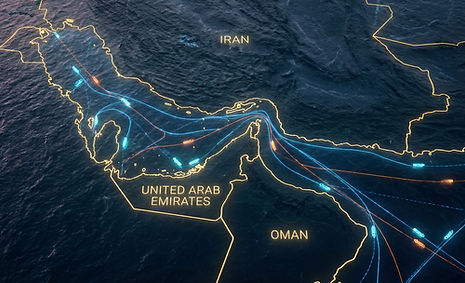
"Hope? at Last" returns with a  twelve-month review of evidence against its projected scenarios to measure which structural calls held and where probability has shifted between the plausible futures. Written from inside the closure of Hormuz following the February 2026 war with Iran, the review asks whether the study's most hopeful path, a Gulf-led order bound by economic integration rather than political agreement, can hold under fire. The review describes an order sustained less by cooperation than by necessity, as Gulf states are pushed onto shared infrastructure that reroutes energy and trade around contested chokepoints, and as the region's middle powers carry the connective tissue between divided capitals. The study traces a security architecture where deterrence has become the organizing feature of the regional order rather than its restraint, and weighs where the year ahead could tilt the region back toward integration or further toward confrontation.

Regional Infrastructure Atlas

Explore an interactive map of trade corridors and the underlying Hormuz-bypass architecture across the Middle East

Support Evidence-Based Research and Open Access to Global Data

Help us maintain free, unrestricted access to critical development data for researchers, policymakers, and organizations worldwide. Your support enables evidence-based decision-making and empowers communities to drive meaningful change.

100%

​Free Access

24/7

Data Availability

No

Paywalls

bottom of page